BONXI ML SERIES · CORRUGATED CONVERTING
Automatic Paper Feeding Platen Die Cutting & Creasing Machine
The BONXI ML Series combines robotic-arm pre-stacking, vacuum sheet feeding, servo transfer, heavy-duty platen die cutting and automatic delivery in one coordinated system. Eight formats from ML930 to ML2000 give corrugated packaging plants a practical way to automate large-sheet cutting and creasing while retaining flexible manual operation for samples and short runs.
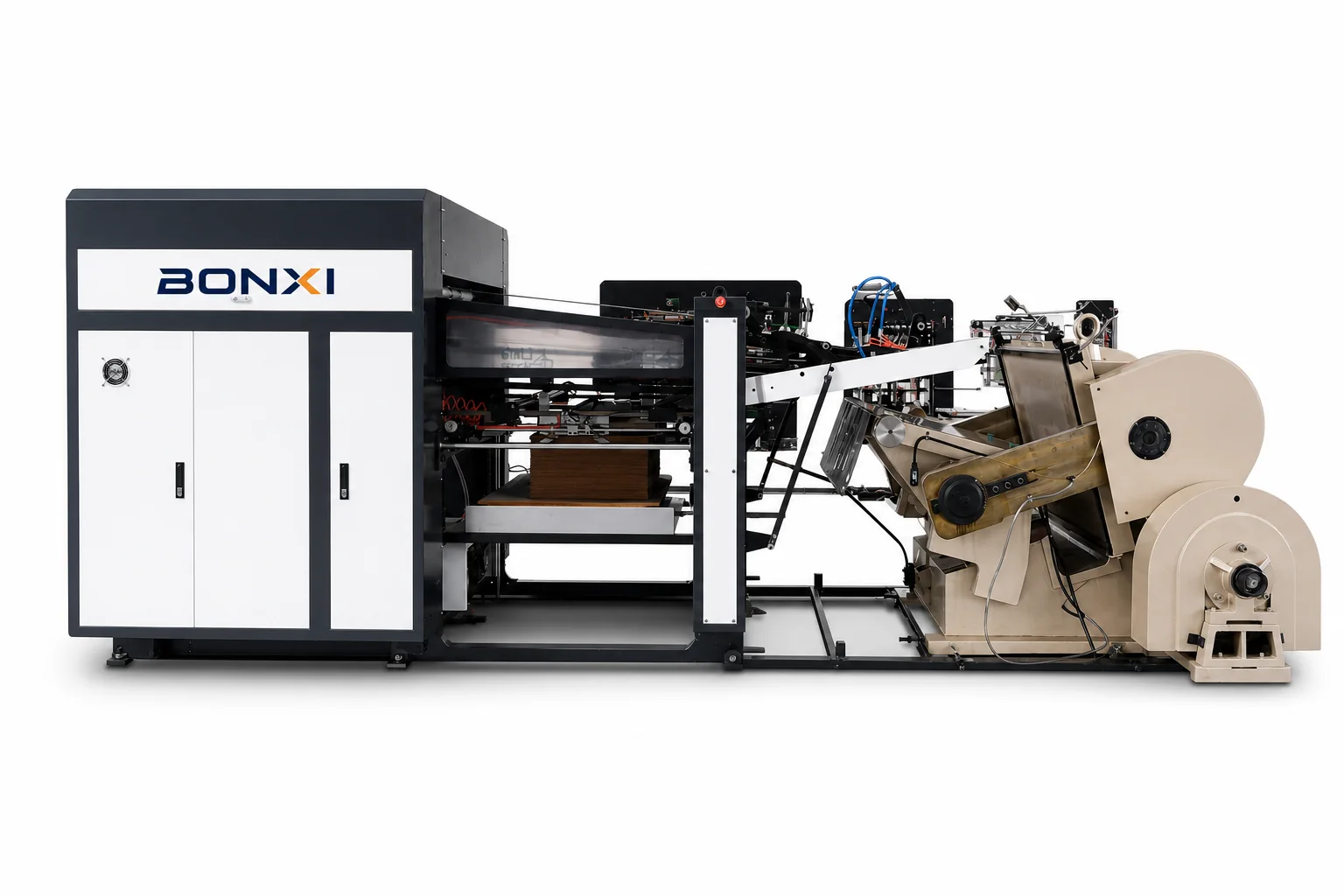
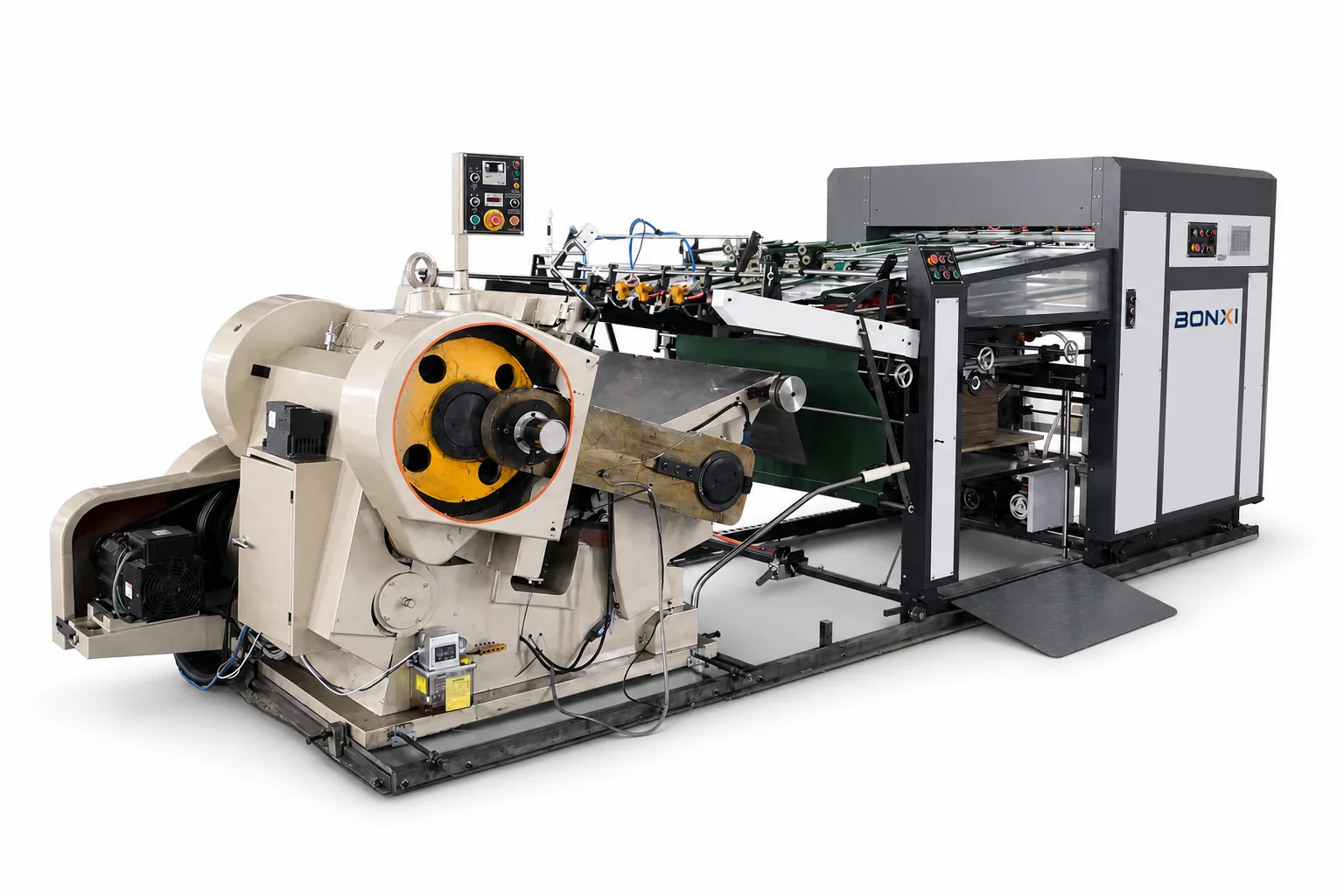
Built for large-format production
Automated handling around a proven platen press
This automatic platen die cutting machine is designed for corrugated cardboard and cardstock applications that need dependable sheet handling, strong cutting pressure and repeatable alignment across a wide size range.
Dual-feeder paper handling: stable conveying for large or warped sheets, with one-key switching between corrugated board and cardstock.
Pre-stacking robotic arm: prepares the next pile while the machine is running and moves it into feeding position on a floor track.
Servo-assisted positioning: photoelectric detection, vacuum pickup and pneumatic side pushers perform secondary sheet alignment before cutting.
Automatic delivery: vacuum pickup, four-side pile alignment, automatic platform lowering and preset counting support orderly downstream handling.
Key advantages
Designed for stable feeding, powerful cutting and safer operation
The ML Series combines mechanical rigidity with practical automation. Each function is intended to reduce avoidable stops, simplify changeover and help operators maintain a consistent production rhythm.
Double-Sheet Protection
Thick sheet separators, high-volume air nozzles, pneumatic rotating presser feet and dedicated detection stop the machine when double feeding occurs.
Heavy-Duty Cavity Structure
HT300 cast components and 45# carbon-steel pull arms provide the rigidity required for high-pressure platen cutting without unwanted frame deformation.
Low-Speed High Torque
An extra-heavy running wheel, enlarged electromagnetic brake and low-speed high-torque servo drive are configured to reduce stalling under load.
Secondary Sheet Alignment
Adjustable pneumatic push gauges correct the sheet position immediately before die cutting to support more reliable registration.
Automatic Lubrication
The electronic oil pump uses timed memory control, an oil-shortage display prompt and forced lubrication mode for easier routine maintenance.
Four Safety Protections
Multiple protection measures, manual sample mode and pneumatic track locking support safer setup, plate adjustment and short-order operation.
Coordinated production flow
Feeding, die cutting and delivery units
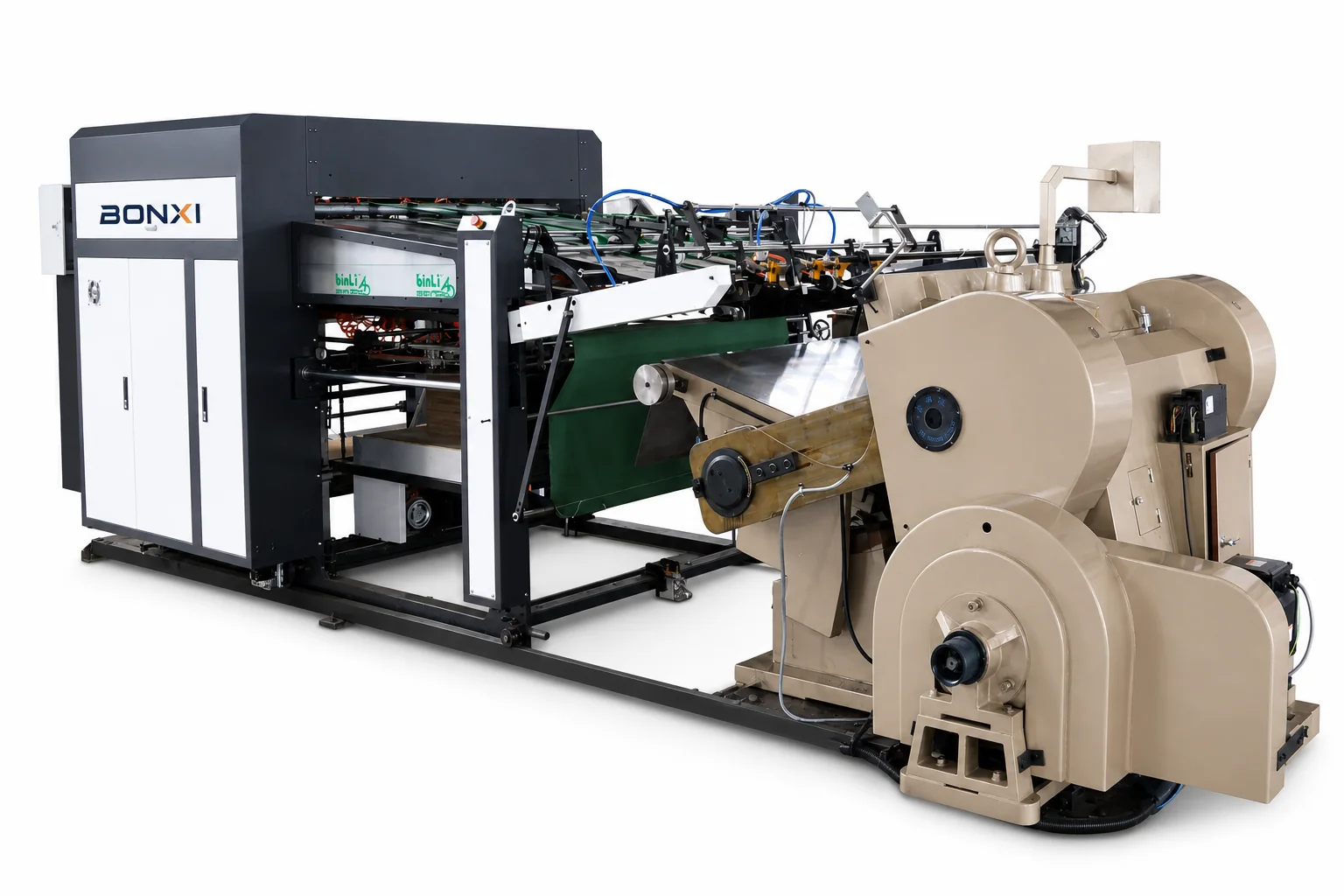
Three coordinated sections move each sheet from the prepared pile to the finished stack, with detection and alarm functions monitoring critical transfer points.
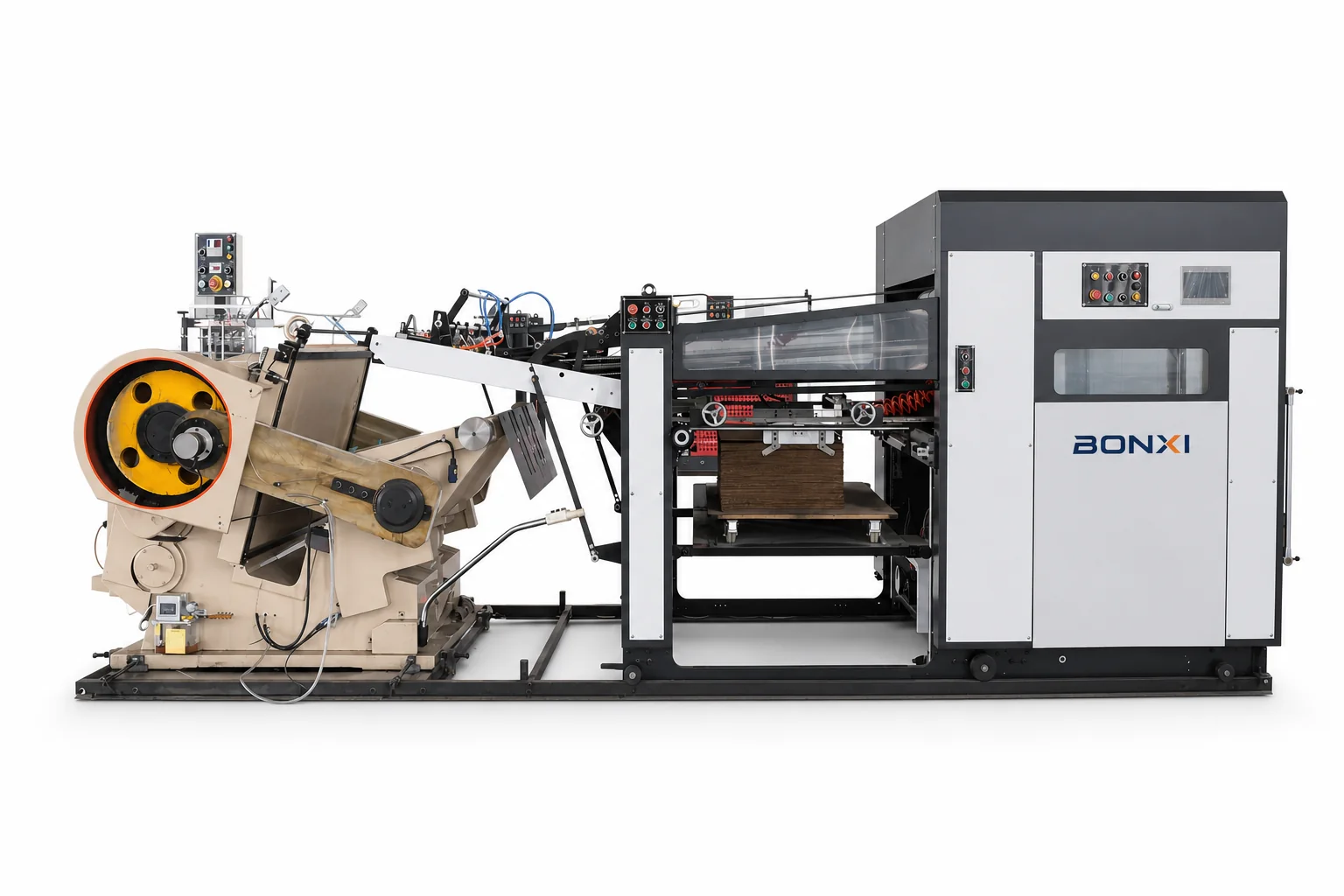
01. Paper Feeding Unit
The lifting platform rises automatically as the pile decreases. Vacuum feeder heads move sheets to the conveyor, while separation and detection devices help prevent double feeding and stop the line when paper runs out.
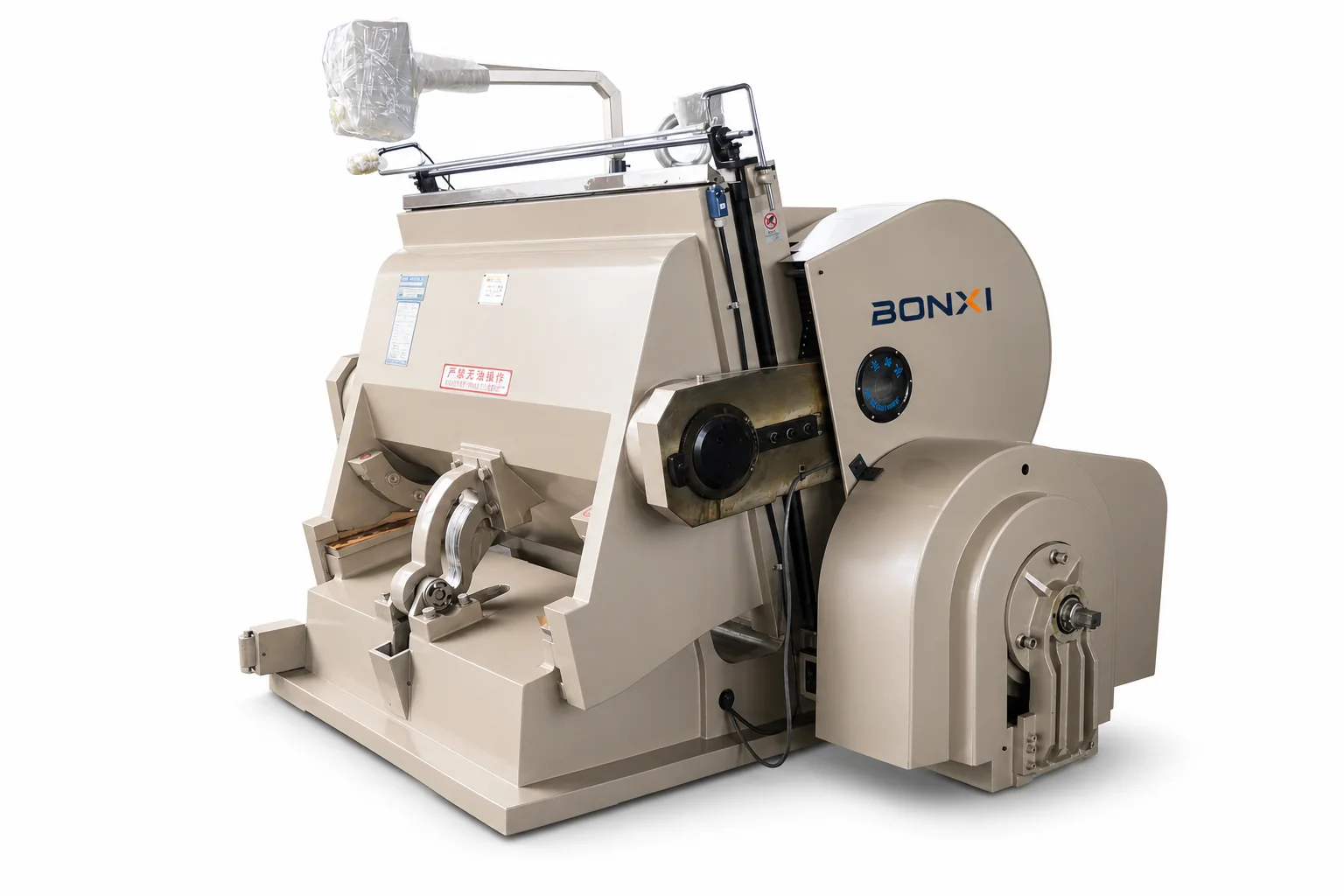
02. Die Cutting Unit
A servo belt transfers the sheet to the receiving platform. Photoelectric detection triggers vacuum pickup, and pneumatic positioning pushers align the board before the platen closes for die cutting and creasing.
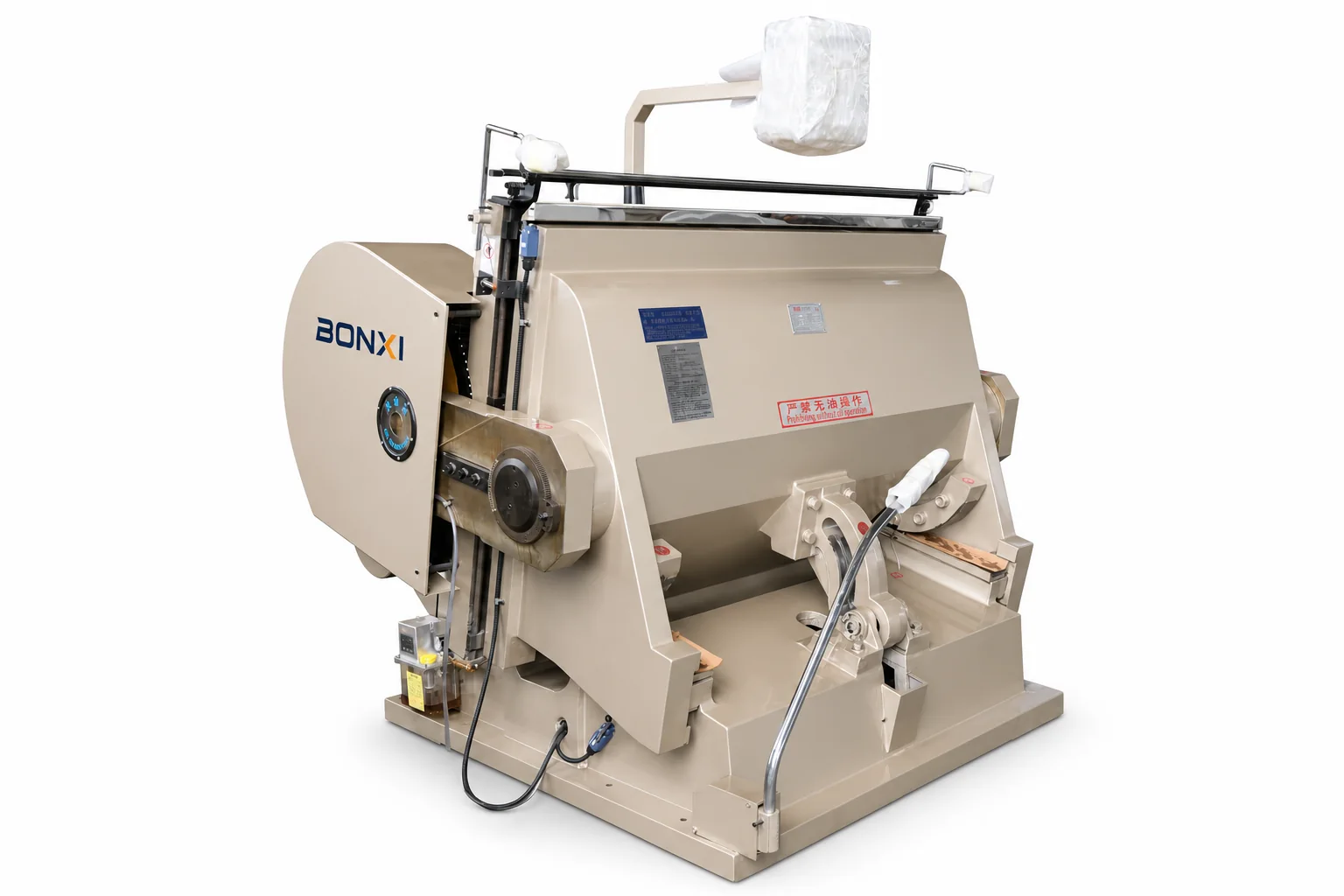
03. Paper Delivery Unit
Servo-driven pickup arms and vacuum nozzles transfer finished sheets to the delivery platform. Four-side pile alignment, automatic lowering, counting and alarm functions support neat stacking and quick cart changes.
Technical parameters
ML930–ML2000 model comparison
Choose the working format according to the largest sheet, required cutting force, available floor space and expected production rhythm.
| Model | Approx. Weight | Overall Dimensions (L × W × H) | Speed | Motor Power | Cutting Area | Cutting Force |
|---|---|---|---|---|---|---|
| ML930 | 3 T | 3500 × 1900 × 1900 mm | 25 sheets/min | 8 kW | 930 × 670 mm | 120 T |
| ML1100 | 6.1 T | 6000 × 2100 × 2000 mm | 22 sheets/min | 9.5 kW | 1100 × 800 mm | 140 T |
| ML1200 | 6.3 T | 6000 × 2100 × 2000 mm | 22 sheets/min | 9.5 kW | 1200 × 820 mm | 150 T |
| ML1400 | 8.8 T | 8000 × 2400 × 2200 mm | 20 sheets/min | 11.5 kW | 1400 × 1000 mm | 200 T |
| ML1500 | 9 T | 8000 × 2400 × 2200 mm | 20 sheets/min | 11.5 kW | 1500 × 1050 mm | 200 T |
| ML1700 | 13 T | 8000 × 2600 × 2200 mm | 20 sheets/min | 15 kW | 1700 × 1100 mm | 260 T |
| ML1800 | 18 T | 9000 × 2700 × 2300 mm | 13 sheets/min | 25 kW | 1800 × 1450 mm | 300 T |
| ML2000 | 19 T | 9000 × 2800 × 2300 mm | 13 sheets/min | 25 kW | 2000 × 1500 mm | 300 T |
Speeds are nominal model values. Actual output depends on sheet dimensions, board condition, die layout, material thickness, operator setup and the confirmed machine configuration. Final specifications are subject to the signed technical agreement.
Mechanical and control components
Selected components for dependable operation
The standard and heavy-duty configurations use established electrical, pneumatic and transmission suppliers. Final brands and voltage are confirmed in the technical agreement for each project.
Machine views
Automatic flatbed die cutter gallery
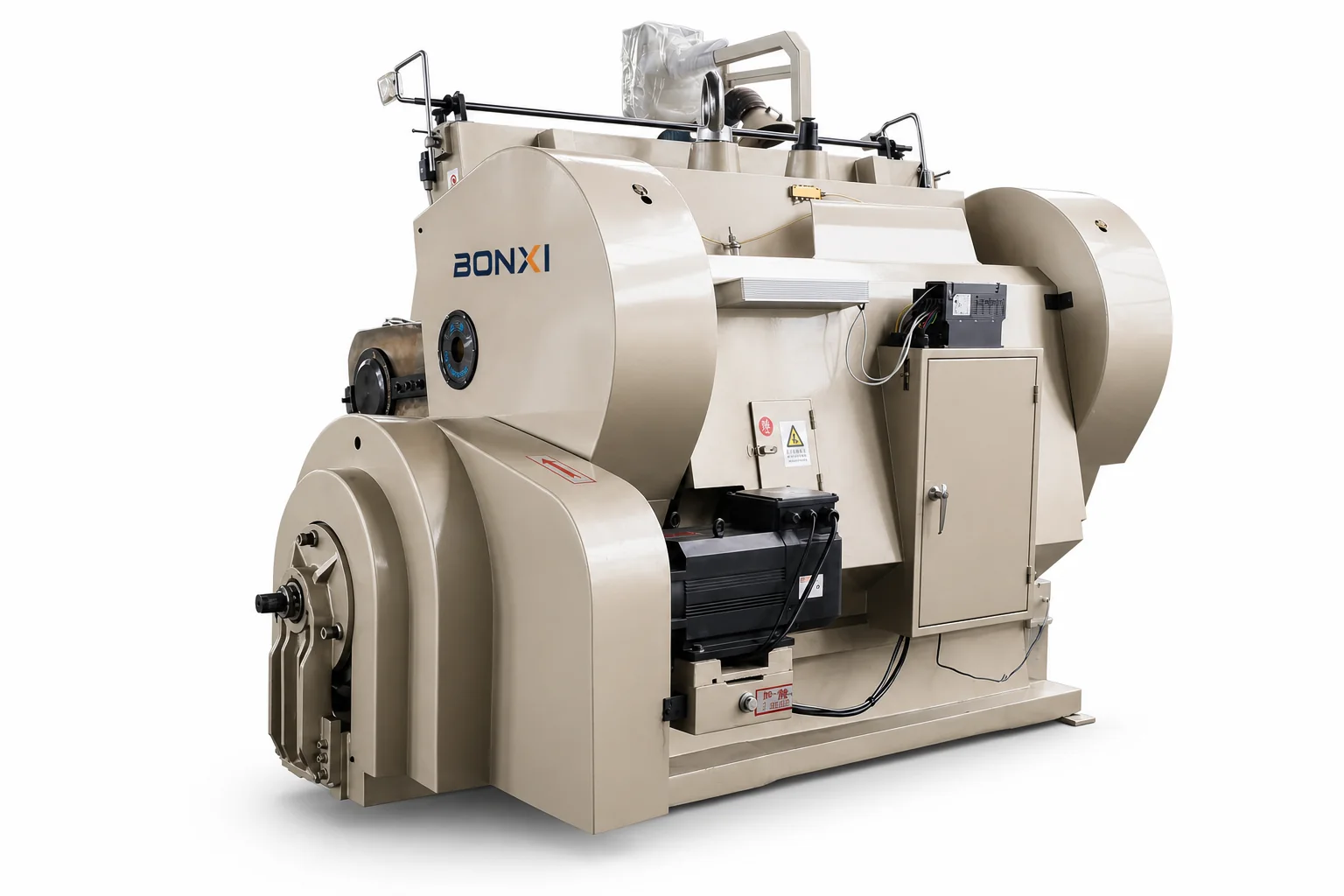
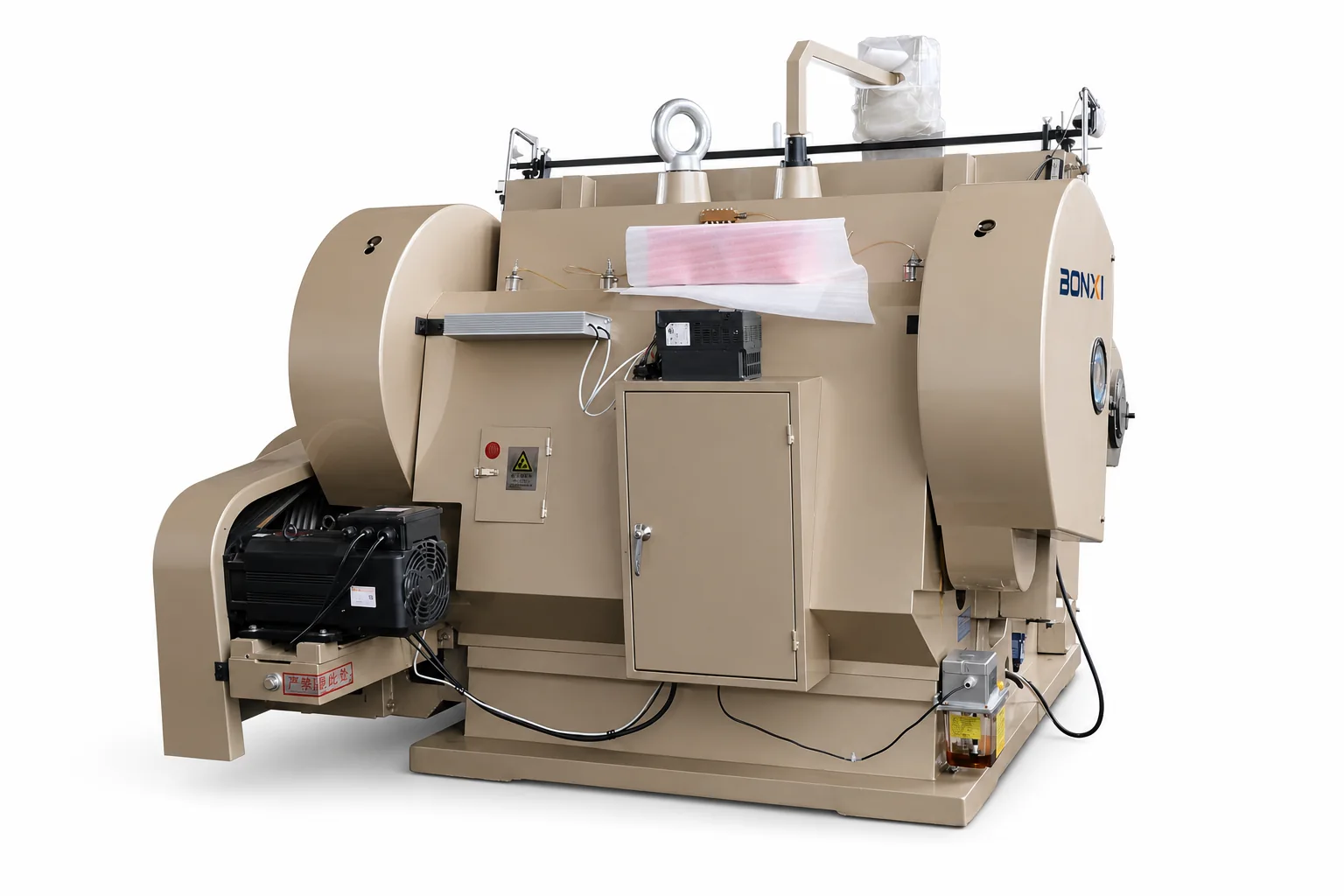
Multiple angles show the platen body, robotic arm, feed path, drive components, delivery section and full-line footprint.
Configuration guidance
How to select the right ML Series model
A useful recommendation starts with the actual board, die and factory conditions rather than the maximum format alone.
1. Confirm the sheet range
Provide minimum and maximum sheet dimensions, board grade, flute type or cardstock thickness, typical die layout and the largest recurring order.
2. Check force and output
Match the cutting area and force to the material, number of cutting rules, crease requirements and realistic target sheets per minute.
3. Review installation conditions
Confirm floor space, machine direction, power, compressed air, foundation, material flow and access for handling and maintenance.
Frequently asked questions
Automatic platen die cutting machine FAQ
What materials can the BONXI ML Series process?
The standard configuration supports corrugated cardboard and cardstock. The feeding section includes one-key material-mode switching. Exact thickness, board condition and die requirements should be confirmed before final model selection.
Which models are available?
The range includes ML930, ML1100, ML1200, ML1400, ML1500, ML1700, ML1800 and ML2000, with cutting areas from 930 × 670 mm to 2000 × 1500 mm and cutting force from 120 to 300 tons.
How does the machine prevent double-sheet feeding?
The feeding system combines thick sheet separators, high-volume air nozzles, pneumatic rotating presser feet and dedicated double-sheet detection. The line stops and alarms when double feeding is detected.
Can operators run samples or short orders manually?
Yes. The robotic arm can move electrically on its floor track for plate adjustment, while manual operating mode supports samples and small batches when full automatic handling is not required.
How are finished sheets collected?
Servo-driven pickup arms and vacuum nozzles move sheets to an automatic delivery platform. Front, rear, left and right alignment devices square the pile, and the platform lowers as stack height increases.
What information is needed for a quotation?
Please provide sheet size range, corrugated flute or cardstock specification, material thickness, die-cut product type, desired output, factory voltage, available floor space and any optional counting or label-insertion requirements.
Related carton machinery
Build a complete corrugated converting solution
Connect die cutting with upstream printing or laminating and downstream folding, gluing or stitching according to your carton process.
Request a technical recommendation
Tell us your sheet size, material and target output
BONXI will compare the suitable ML Series formats and review the feeding, cutting force, electrical configuration and factory layout required for your production.